
With Input from Harshit Mansukhani
1.42 billion people in India must be aware that their country is hosting the G20 summit. In cities across this vast nation, the beaming face of Prime Minister Narendra Modi adorned the giant posters rhetorically informing the public about the G20 presidency.
As some of the most powerful leaders descended into Delhi for the two-day G20 summit, the Indian government has spent upward of Rs 9 crores to beautify the capital city and has covered up the national capital’s slum and low-lying areas as if to show that the poor never existed there.
The glitz and PR drive that the Government of India has undertaken coupled with casual repetition of the importance of this summit and the overarching benefits for the globalised world by India might make someone feel that it is as if India has been “anointed by its peers, rather than merely being next up in the hosting rotation.”

Source: CNN
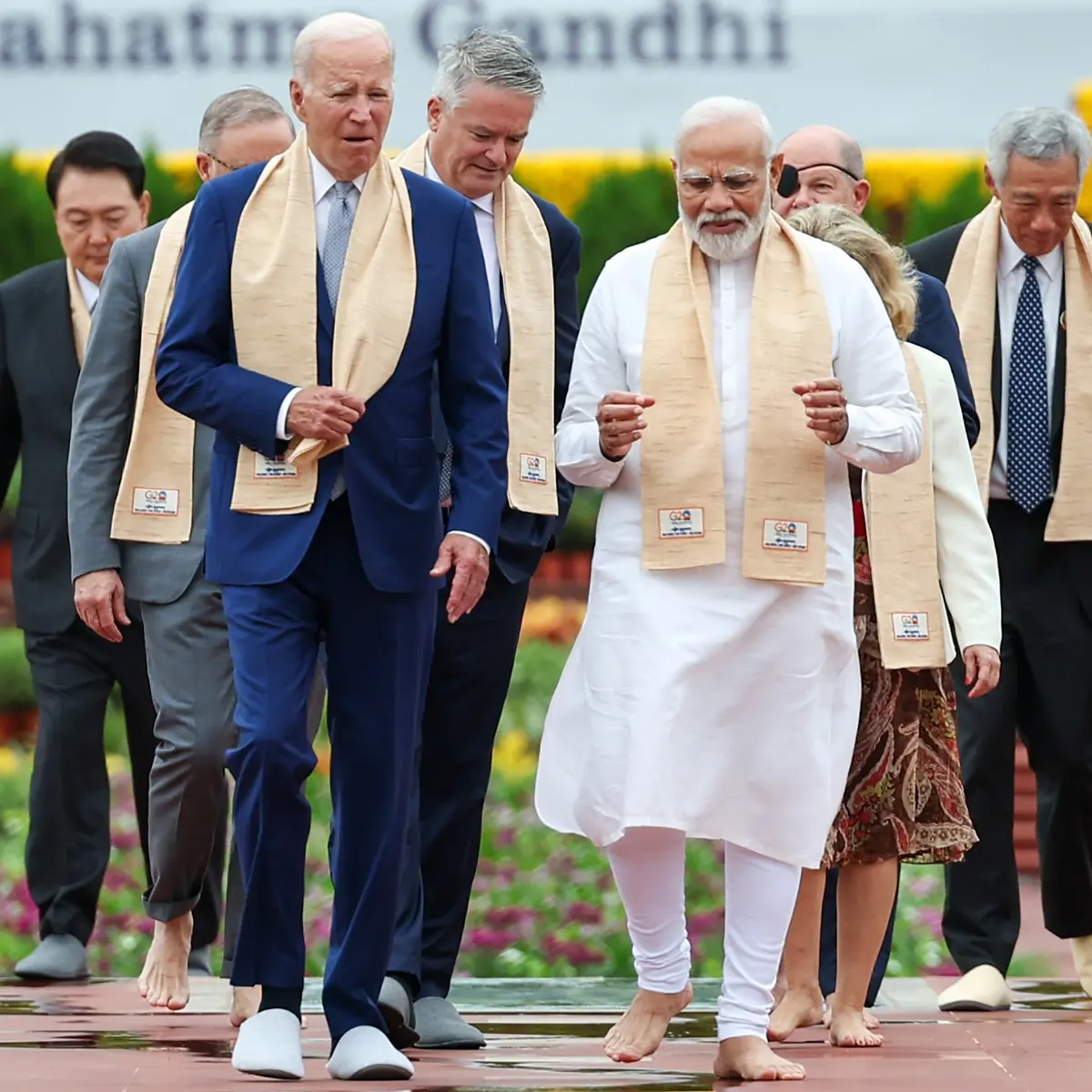
With its wall-to-wall promotion and all the hype around this annual summit, the Bhartiya Janta Party-led government in the Centre is milking every opportunity to show the “fountainhead of democracy” as a leader and the voice of the Global South- an achievement of Mr. Prime Minister’s foreign policy.
But more than just glitz and glamour, there was much at stake for this round of G20 and with a world in disarray, the group still has not reached a consensus on a joint communique which will represent unanimity amongst the group members. India was looking at making something meaningful out of its presidency. However, the waters have been rough till now.
There is no consensus among the US and its allies on the war in Ukraine and India’s growing proximity and reluctance to denounce Russia’s war efforts in Ukraine has raised an eyebrow in Washington D.C. and other Western capitals. Only due to this lack of consensus among the members, India has failed to bring out any subjective and actionable documents from the working group meetings preceding the summit.
Source: The Guardian
On the other hand, the relations between India and China have gone through yet another round of border issues and look to have no immediate resolution. Just before the commencement of the summit, China’s President Xi Jinping joined his Russian counterpart Vladimir Putin in skipping the meeting in Delhi.
At home, India is marred with growing inflation, lowering the income of the middle class, more people forced below the poverty line and surmounting yet isolated communal issues that can easily take the shape of nationwide riots. So, with so much at stake, let us take a deep dive into what are India’s shared goals and the challenges that lie ahead.
What Is G20?
G20 or Group of Twenty is a forum for international economic cooperation. It was founded in 1999 by the largest twenty economies of the world after the Asian Financial crisis. Initially, it was formed to discuss global economic and financial issues by the financial ministers and central bank governors which was then upgraded to the level of heads of state/ governments in the wake of the Global Financial Crisis of 2007. In 2009, it was formally designated as the “Premier forum for international economic cooperation”. It consists of 19 countries along with the European Union constituting 85% of the world’s GDP, 75% of World trade, and 2/3rd of the total world population. These countries are Argentina, Australia, Brazil, Canada, China, France, Germany, India, Indonesia, Italy, Japan, South Korea, Mexico, Russia, Saudi Arabia, South Africa, Turkey, the United Kingdom and the United States.
Unlike other International Organizations like the UN or NATO, it doesn’t have a permanent secretariat or treaty enforcement but rather a rotating presidency with annual informal summits. These summits have mainly focused on macroeconomic issues previously, but with the rising global transitions it has expanded its agendas to other increasingly important issues: trade, sustainable development, health, agriculture, energy, environment, climate change, and anti-corruption.

The presidency is responsible for creating and executing the agenda for a year and hosting the summit towards the end of its tenure. The G20 presidency functions like a Troika where the previous, current, and next presidents work together. The G20 consists of two parallel tracks: the finance track and the Sherpa track. The finance track includes financial discussions led by the finance ministers and the governors of the Central Bank of the member countries. Whereas the Sherpa track includes diplomatic discussions and substantive work of the G20 summit coordinated by the sherpas of member countries, who are the personal emissaries of the leaders. They oversee negotiations over the year, discussing the agenda items for the summit. Both the tracks have thematically oriented working groups where the representatives from relevant ministries of the members as well as the guest countries and international Organizations participate. The working groups meet regularly throughout the term of the presidency.

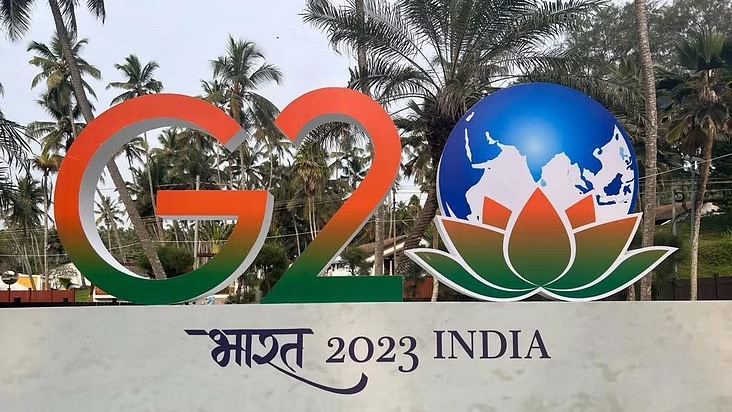
This year the G20 summit is being hosted in our own country’s capital New Delhi. The logo for India’s presidency is Planet Earth with a Lotus, India’s national flower, the colours of which are inspired by that of an Indian flag- saffron, white, green, and blue. where the flower reflects growth amid challenges, the earth represents India’s pro-planet approach to life. Below the logo is “Bharat”, written in Devanagari script.
India’s theme for the G20 presidency is “Vasudhaiva Kutumbakam”. The phrase is drawn from an ancient Sanskrit text which translates to One Earth, One Family, One Future. The phrase has been used by India on various international platforms from time to time to emphasize its philosophical idea of interconnectedness and unity, promoting a sense of global harmony, cooperation, and shared responsibility for the future well-being of the planet and its inhabitants. As per the organizers, the event will also focus on LiFE (Mission Lifestyle for Environment), “with its associated, environmentally sustainable and responsible choices”. It is not the first time that India’s foreign policy has been influenced by ancient texts and their idealistic approaches, India’s foreign minister S. Jaishankar is known to integrate India’s geopolitical legacy with the ideas of spirituality, cosmopolitanism, and exceptionalism into contemporary geopolitics.
The list of guest invitees for the summit this year includes countries Bangladesh, Egypt, Mauritius, Netherlands, Nigeria, Oman, Singapore, Spain and the United Arab Emirates. International organizations like the United Nations (UN), the International Monetary Fund (IMF), the World Health Organization (WHO), the World Trade Organization (WTO), the International Labor Organization (ILO) and the Organisation for Economic Cooperation and Development (OECD) have also been invited. And International Solar Alliance (ISA), the Coalition for Disaster Resilient Infrastructure (CDRI) and the Asian Development Bank (ADB) to the two-day summit.
Although the G20 presidency is merely based on rotation, this year India’s presidency has proved to come timely considering India’s international stature. The world is dealing with the after-effects of the global pandemic that shook the most powerful countries of the world to their core, conflicts whose consequences aren’t just limited to their borders and financial instability with surging inflation and so many other crises. As the president of G20 this year, India has several powers that can change the winds of influence in favour of India if used carefully. This presidency has a lot of implications both for the country as well as the global community. A Global Leader:
As the world’s most populous country and one of the fastest-growing economies, there is no doubt this presidency offers a crucial opportunity for India to assert itself as a global leader. It will allow India to shape the global agenda, propose policies, and challenge existing power structures, contributing to a more inclusive and representative international order.
Representative of Global South:
India’s G20 presidency can prioritize the needs of developing nations or the Global South, providing a platform to raise their concerns and advocate for inclusive growth. As a significant developing economy itself, India is in a unique position to address issues such as poverty alleviation, sustainable development, and climate change, creating a more balanced global economic system.
Attractive FDI Destination:
The G20 platform allows India to showcase its economic potential and reforms undertaken to attract investment. By presenting itself as an attractive investment destination, India can boost its economic growth, create employment opportunities, strengthen industries, and foster innovation.
Enhanced Regional Cooperation:
The platform can facilitate regional cooperation within South Asia, providing an enabling environment for resolving long-standing border conflicts with Pakistan and China and promoting economic integration. Collaborative efforts in areas such as infrastructure development, trade facilitation, and counterterrorism can strengthen regional stability, supporting India’s larger vision of a peaceful and prosperous South Asia.

General Elections 2024:
With the General Elections due in 2024, India’s G20 presidency and its global image could help bolster Modi’s already growing reputation at home as a leader of international stature.
The agenda in New Delhi includes climate change, economic development, and debt burdens in low-income countries, as well as inflation spurred by Russia’s war in Ukraine. If members can reach a consensus on any or all these subjects, they will produce an official joint declaration at the end. But will it be easy for G20 members to reach a consensus?
Over the years G20 has produced many ambitious statements on major issues, but since there is no treaty enforcement, there have been rather disappointing results in terms of actions. Leading an international forum like the G20 comprising both developed and developing nations presents India with the challenge of managing diverse interests and balancing conflicting agendas of members of the group. Along with conflicting interests, the group has direct rivals with heightened geopolitical tension as its members which can prevent it from reaching consensus while tempering with its unity and effectiveness.

Was It A Rhetoric?
As India’s tenure as the head of the G20 group draws to a close, it can reflect on its achievements with a sense of accomplishment. In a period marked by heightened geopolitical tensions among major global powers and widespread disillusionment with the state of international organizations, India not only succeeded in revitalizing the G20 as a more dynamic platform but also possibly rekindled confidence in the effectiveness of multilateral processes and institutions. This was achieved by shifting the focus of global governance discussions away from extreme polarization and placing the so-called Global South at the forefront of the international agenda. In doing so, India also reinforced its standing as a prominent player in the global hierarchy, demonstrating its growing readiness and capability to shape global outcomes, rather than merely being a passive observer of decisions made by others.

For India, engagement in the G20 process has been a journey of reimagining its potential as a responsible global participant. Presently, New Delhi appears enthusiastic about contributing solutions to worldwide challenges, as evident from its proposals for a Global Biofuel Alliance and the India-Middle East-Europe connectivity partnership. Moreover, India is eager to share its experiences in establishing digital public infrastructure. On a global scale, this process has meant acknowledging the shifting centre of gravity towards the developing world. The G20 summit, along with the consensus reflected in the New Delhi declaration, reminded the world’s major powers that there is a collective aspiration for participation in global decision-making, transcending geopolitical disputes.
Crucial issues such as sustainable development, inclusive growth, climate change, food security, bridging the digital divide, regulating emerging technologies, and reforming multilateral development banks demand the involvement of the developing world in the decision-making process. The inclusion of the African Union in the G20 has profoundly transformed the nature of the platform, rendering it more inclusive and representative of the emerging global order.
The global governance framework has faced considerable challenges for an extended period, a fact widely acknowledged today. If India’s stewardship of the G20 can even slightly restore trust in existing governance structures, it would have fulfilled its purpose.
Nevertheless, amidst the significant marketing potential the G-20 offers India, there is a legitimate concern that India may have projected an exclusionary image by omitting elements of its society that don’t align with the current government’s vision.

This tendency was already evident in the choice of symbols and locations emphasized during G-20 meetings, which tend to highlight a specific religious identity, despite India’s diverse religious and cultural landscape.
As Nilanjan Mukhopadhyay suggests, the meetings hosted by India since the beginning of its presidency could have already contributed to India gaining international legitimacy and broader acknowledgement of Hindu nationalism.
This is occurring because India is intentionally using its G-20 presidency as a means of soft power, employing strategic communication to influence the narrative surrounding India. India’s cultural diplomacy, which has historically emphasized its ability to embrace diverse cultures and peoples, is now distinctly at odds with the cultural diplomacy promoted by Hindu nationalism.
Russia’s Diminishing Role in World Politics as Putin avoids G20 Again
Russia’s role in global politics has been diminishing significantly over the years. President Vladimir Putin’s absence from the G20 summit for the third time not only suggests Russia’s diminishing relevance in international affairs but also raises concerns regarding the lack of President Putin’s efforts towards global cooperation and diplomacy.
Russia’s relationship with the major Western powers has deteriorated severely. The annexation of Crimea in 2014 and subsequent military interventions in Ukraine led to economic sanctions imposed by the US and the European Union, isolating Russia on the international stage and further impacting the Russian economy severely. The strained relationship with the West has also led to diminishing trust globally, making it challenging for Russia to regain its influence.

Moreover, Russia’s limited projection of its soft power can also be blamed for its diminishing role in world politics. Even though Russia maintains impressive military capabilities and alliances with countries like China, it lacks cultural influence, active diplomacy, and economic stability, contributing majorly to maintaining an international presence.
G20 is a forum for major powers to discuss the most pressing global issues. By skipping the summit thrice, Putin highlights Russia’s avoidance of working collaboratively with other nations on major global challenges. Such behaviour only reinforces the perception that Russia is no longer a key player in shaping the outcomes of global governance and international relations. It also implies a weakening of Russia’s ability to protect its national interest on the national stage. This can be particularly disadvantageous for the countries that rely on Russia for economic, energy, or security cooperation.
Furthermore, the implications of Russia’s diminishing role in world politics call for a reassessment of global power dynamics and potential reshaping of the global order. This will give way to other powers like China or the EU to step up. And poses an even bigger challenge to existing international institutions.
 FaultLines